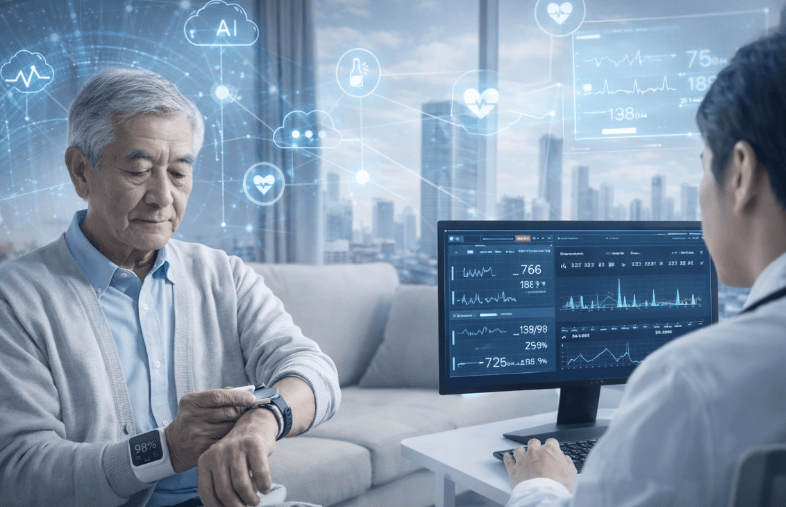
Entering 2026, the popularity of health devices in Japan has expanded beyond fitness consumption into daily monitoring, chronic disease management, and home healthcare. Japan’s aging population has increased the need for continuous observation of indicators such as blood pressure, blood glucose, weight, sleep, and activity levels. At the same time, chronic health conditions including hypertension, diabetes, and cardiovascular disease have encouraged consumers to incorporate regular recording and early detection into their daily routines. Growing awareness of preventive healthcare, together with the development of telemedicine and home health management services, has further expanded the situations in which these devices are used.
Wearable technology is an important driver of this trend. Smartwatches, activity trackers, and sleep-monitoring devices can collect information such as steps, heart rate, exercise duration, and rest patterns during everyday wear, then display changes and trends through mobile apps. For many Japanese households, health devices are used not only for personal exercise but also to observe older family members at home, share information among family members, and communicate more systematically with medical or care services.
When choosing a device, Japanese consumers typically prioritize measurement accuracy and ease of operation. They pay particular attention to whether a product is compact, portable, and suitable for older adults with reduced vision, hearing, or mobility. Data privacy is equally important, so users should understand where data is stored, how widely it is shared, and what security measures the service provider uses. Products that connect with smartphones, home health platforms, or medical services can make long-term record keeping easier, but connection stability and app usability should also be tested in practice.
Whether a product meets relevant Japanese medical-device certification requirements is another important reference when assessing its intended use and reliability. Everyday health-management devices mainly help users understand changes in their bodies and cannot automatically replace a doctor’s diagnosis. Medical devices intended for diagnosis or treatment should be used according to their approved purpose and professional guidance. A popular device is not necessarily suitable for everyone; selection should take into account age, medical history, lifestyle, budget, and a doctor’s recommendations.
Home health management should begin with basic, stable monitoring devices that are easy to use consistently. Upper-arm electronic blood-pressure monitors are generally more suitable than wrist models for long-term home records because the measurement position is closer to the heart and results are relatively stable when posture is correct. Wrist monitors are easier to carry, but they are more affected by wrist height, angle, and movement, making them useful when space is limited or monitoring is needed outside the home. Before buying, confirm that the cuff fits the upper-arm circumference. Before measuring, avoid exercise, smoking, and coffee, rest quietly for several minutes, keep your back supported, place both feet flat on the floor, and keep your arm approximately level with your heart. Measuring at similar times and recording the date, time, values, and physical condition continuously is more informative than taking an occasional measurement.
Digital thermometers mainly include quick-measurement, predictive, and actual-measurement models. Predictive models estimate results more quickly, while actual-measurement models take longer but are generally better suited to households seeking stable readings. During a fever or suspected infection, do not judge the condition from a single reading. Repeat measurements at the same site and around the same time, while also observing changes in chills, coughing, fatigue, and other symptoms.
Blood-glucose meters are suitable for people who need to understand changes in blood glucose regularly. Continuous glucose monitors provide more continuous trend information and are often used by people with diabetes or by those who need enhanced management after professional assessment. People with diabetes should set measurement frequency and targets according to medical advice and should not change medication solely based on device readings. Pulse oximeters can be used to observe certain respiratory conditions, during recovery, or as a reference during exercise, but cold fingertips, nail polish, hand movement, and intense exercise can affect the results. If a low reading is accompanied by difficulty breathing, chest pain, bluish lips, or abnormal consciousness, seek medical attention promptly.
Common purchasing criteria include product certification, measurement reliability, calibration methods, the cost of consumables and test strips, data-storage capacity, and app compatibility. When a device is shared by several people, create separate accounts or clearly distinguish each person’s records to avoid mixing data.
In 2026, Japanese consumers’ interest in wearable health devices has expanded from simply recording steps to managing everyday health conditions. Smartwatches can usually record heart rate, heart-rate variability, activity, stress trends, sleep stages, skin temperature, and exercise performance continuously or at scheduled intervals, then generate long-term trends through a mobile app. For people who walk to work, train for running, need reminders to avoid prolonged sitting, or want to see notifications promptly, a watch’s screen, positioning, exercise modes, and emergency-contact functions offer clear advantages. Some products can also send alerts after detecting a fall, an unusual heart rate, or a long period of inactivity, providing helpful information for older adults who live alone and their families.
Smart rings are smaller and lighter and usually have no prominent screen, making them more suitable for long-term wear and overnight recording. They often focus on sleep duration, heart-rate changes, skin temperature, and recovery trends, and may suit users who do not want to wear a watch while sleeping. Dedicated sleep devices can be placed beside the bed, under a mattress, or elsewhere in the room, reducing the burden of wearing a device while paying closer attention to bedroom temperature, noise, light, and breathing-related changes. Choose according to your goal: consider a smartwatch first for exercise, navigation, and communication; a smart ring for continuous sleep recording; and a sleep-tracking device for improving the nighttime environment.
It is important to understand that these devices provide trend references, not medical conclusions. Sleep stages, stress scores, and recovery indexes are usually calculated by algorithms from sensor data and may be affected by how tightly the device is worn, skin condition, device position, software updates, and individual differences. They cannot replace a professional sleep examination at a hospital and should not be used to diagnose an arrhythmia or sleep disorder independently. If chest discomfort, fainting, persistent insomnia, or abnormal data repeatedly occurs together with physical discomfort, consult a doctor promptly.
When buying and using a device, also compare battery life, water-resistance rating, wearing comfort, and the completeness of its Japanese-language app. Compatibility with the smartphone’s operating system and connections with commonly used health services in Japan can also affect the long-term experience. Before enabling cloud synchronization, location recording, health-data sharing, or family alerts, read the authorization scope, disable unnecessary permissions, and confirm how data is stored and deleted.
Daily management should not be controlled entirely by digital readings. A single drop in a sleep score or one unusual heart-rate reading may result from measurement error, alcohol, exercise, stress, or a change in sleep habits. A more reliable approach is to observe changes over one to several weeks, while considering personal feelings, lifestyle records, and medical advice. Use devices as tools to identify trends and adjust habits, not as the only basis for evaluating health.
Not all home health devices focus on measurement data. Many products are better suited to improving daily activity and physical comfort. Shoulder, neck, and waist massagers, along with fascia-release tools, may help relieve muscle tension after prolonged sitting, housework, or light exercise. Low-frequency, electrical-stimulation products and home rehabilitation trainers are often used to support muscle recovery and joint movement. Follow the manual’s instructions regarding duration, intensity, and contact areas, and do not equate temporary relaxation with a therapeutic effect.
Balance-training mats, grip trainers, resistance bands, steppers, and lightweight lower-limb training equipment are suitable for older adults or people who work at a desk and want to increase activity gradually. When choosing these products, prioritize stability, adjustable resistance, convenient storage, and clear movement instructions. People with pacemakers or other implanted electronic devices, pregnant people, those with skin wounds or inflammation, and people with serious bone, nerve, or cardiovascular conditions should not use electrical-stimulation or high-force massage devices without medical advice.
Managing the home environment is also part of proactive health. Carbon-monoxide detectors, thermometers and hygrometers, and indoor-air-quality monitors can help identify insufficient ventilation, excessive dryness, or high humidity. During pollen season, an air purifier may help reduce airborne particles; in winter, a humidifier can be used according to humidity levels. In humid areas, a dehumidifier can help reduce the risk of mold growth. These products can support environmental improvements, but they should not be promoted as detoxifying products, cures for allergies, or substitutes for professional diagnosis and treatment.
Water-filtration devices should be selected according to local water quality, filter type, and replacement schedule, and maintained consistently so that an overdue filter does not affect water quality. When choosing home health devices in 2026, first define your actual needs, then check product certification, intended users, and the manual. Compare the long-term costs of consumables, maintenance, and electricity, and understand data storage, internet permissions, and privacy policies. Keep regular records and use device data as a reference for communication with healthcare professionals. If persistent abnormalities or clear symptoms appear, take the records to a doctor rather than using a device as a substitute for medical diagnosis.